

Low FODMAP spaghetti squash has been a staple in my low FODMAP kitchen for years, and it started as a simple question: could spaghetti squash deliver the same garlic Parmesan comfort as a bowl of pasta?
Turns out yes, but only if you treat it right. The squash needs garlic-infused olive oil to build real flavor, and once you add butter, Parmesan, and fresh basil, you have a side dish that works for the whole table.
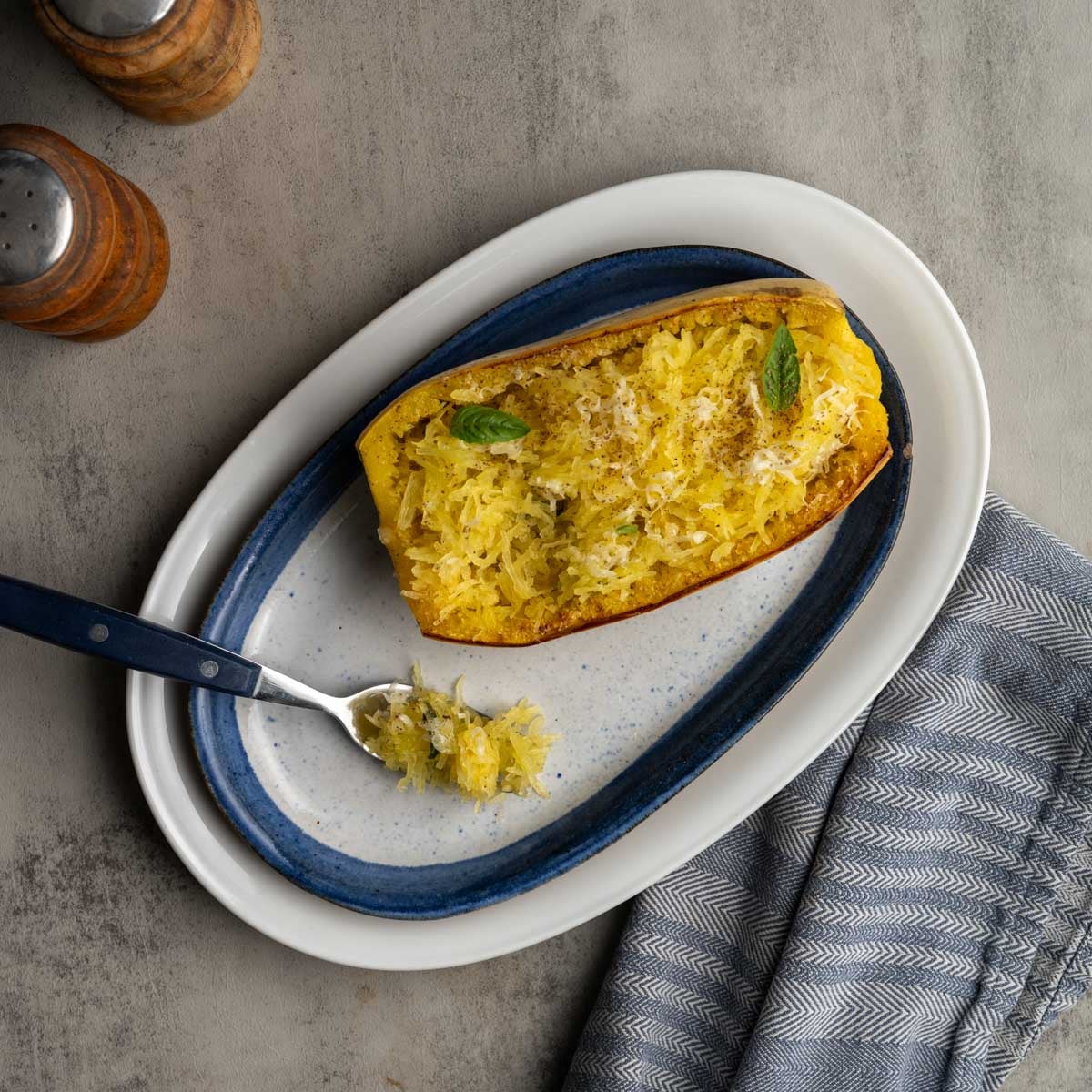
Here's what took me longer than I'd like to admit: spaghetti squash does not taste like spaghetti noodles. It just doesn't. Ask me how I know.
Once I stopped fighting that and started treating it like its own thing - a mild, slightly sweet vegetable with great texture and a blank canvas for flavor - I could actually build something worth eating. This recipe came directly out of wanting that same garlic Parmesan comfort that my Creamy Parmesan Pasta delivers, just in a form that works as a low FODMAP vegetable side dish without anyone asking questions. Mission accomplished.
And if you are already a spaghetti squash fan, try spaghetti squash boats with Italian sausage that use this same base but make it into a main dish.
Jump to:
Why You'll Love This Recipe
- Naturally gluten free and low FODMAP - no swaps needed
- Garlic flavor without the garlic, thanks to garlic-infused olive oil
- Simple enough for a weeknight, pretty enough for company
- A great way to get more vegetables on the table without anyone noticing
- Easy cleanup with parchment paper - my kind of math
What You'll Need
Spaghetti squash is the star here, so it is worth noting a few things before you start.
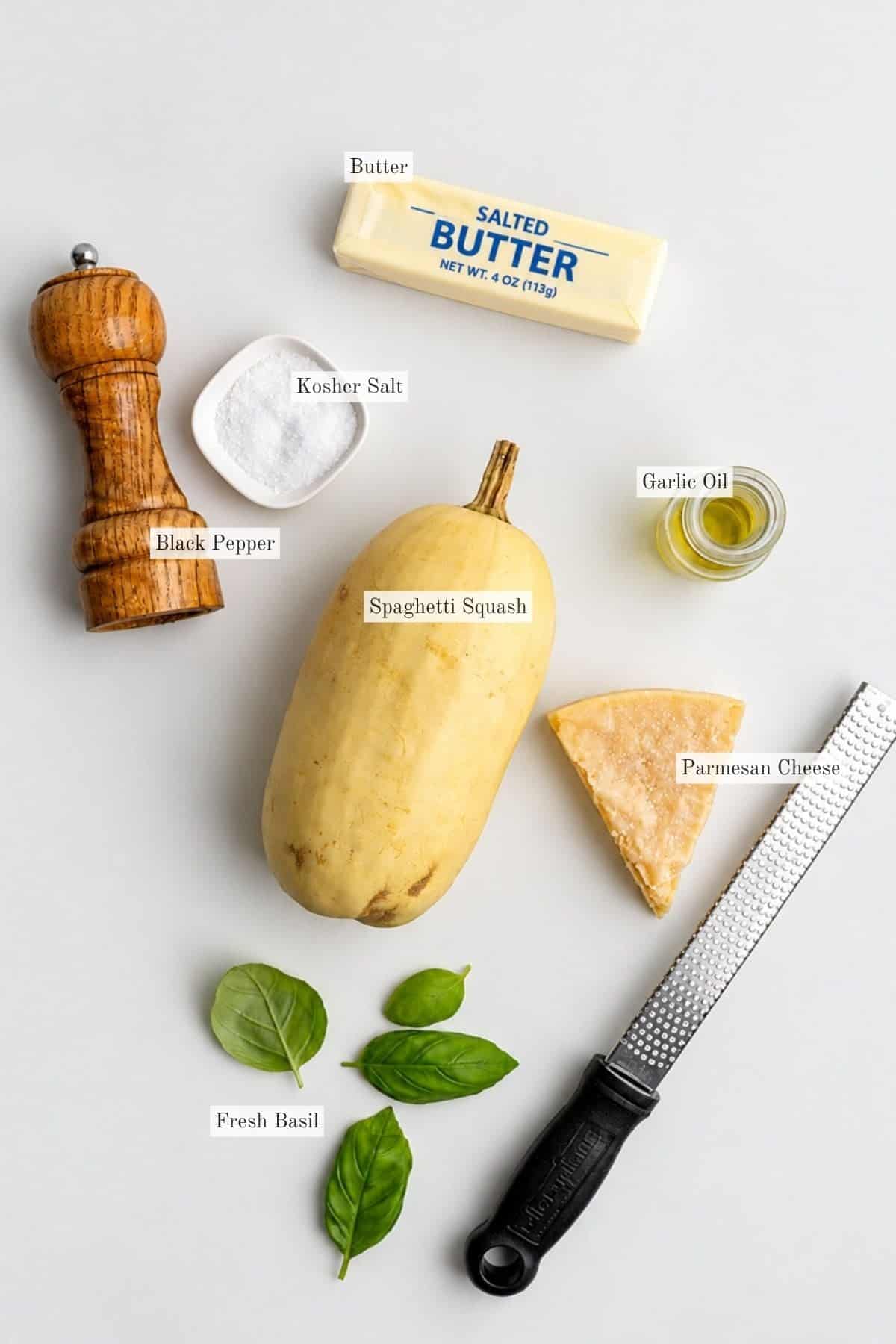
- Spaghetti Squash - A 2-pound squash is a great size for this recipe. Like people, spaghetti squash comes in all different sizes. Bigger squash will need more time in the oven, and smaller ones will cook faster. Keep that in mind when you are checking for doneness.
- Garlic-Infused Olive Oil - All the garlic flavor, none of the FODMAPs. This is the workaround that makes low FODMAP cooking actually enjoyable. My favorite brand is Covita. Find it on Amazon if your store does not carry it.
- Butter - Cut it into small cubes so it melts evenly into the warm squash strands. Salted butter works great here.
- Parmesan - Freshly shredded Parmesan melts beautifully and adds a savory, salty bite. Pre-shredded works in a pinch, but fresh is better.
- Fresh Basil - Just a little on top. It adds a fresh, bright finish that makes the whole dish pop.
See the recipe card for the exact measurements and complete instructions.
Selected ingredients are based on guidance on current serving sizes measured by the Monash University Food App and FODMAP Friendly App at the time of publishing. As always, follow your gut and modify as needed.
Step-By-Step Instructions
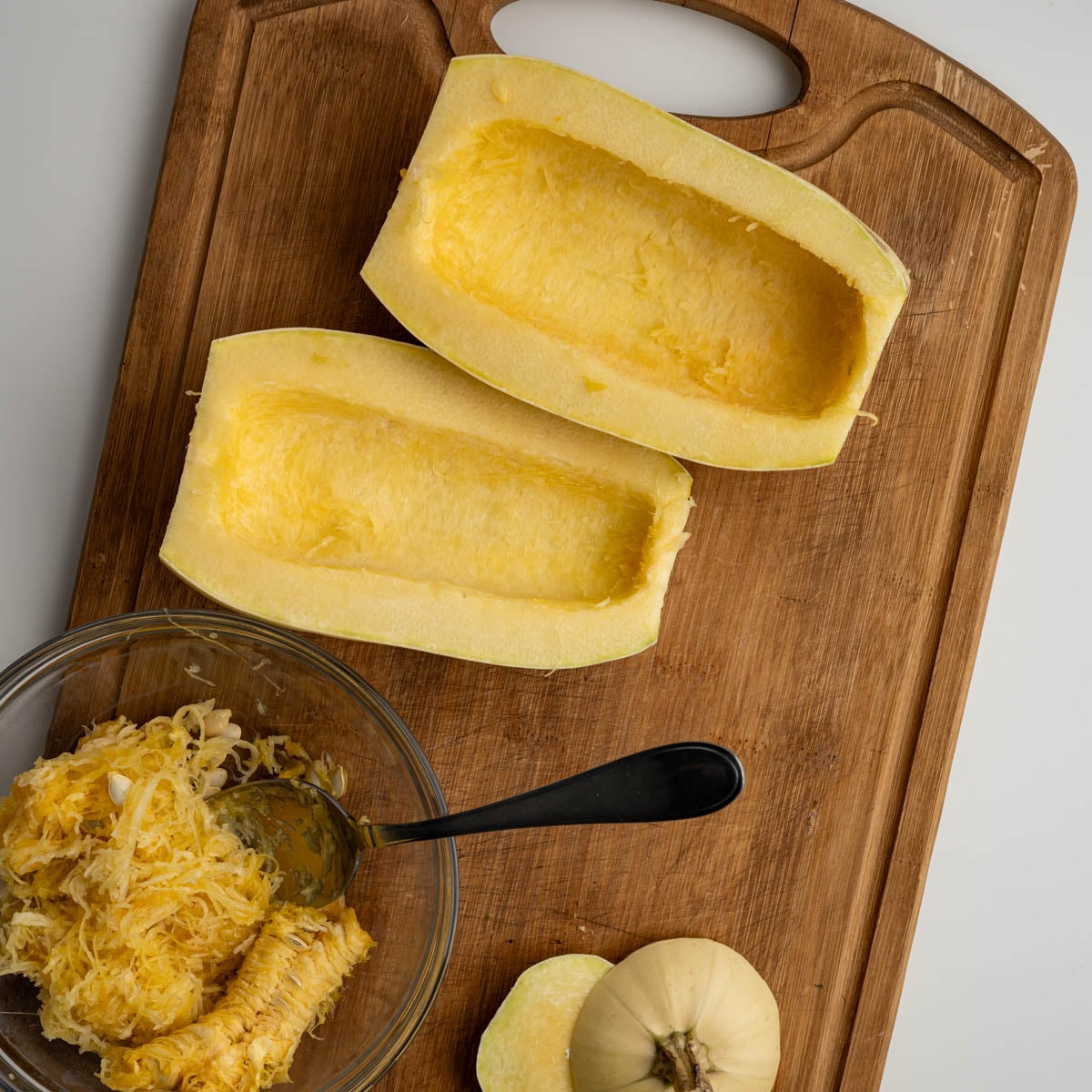
Step 1: Preheat the oven to 400 degrees F. Wash the squash. Slice off the top and bottom, then set it upright on a cutting board and slice straight down the middle. Use a sharp knife and take your time.
To make this easier, microwave the whole squash for 1-2 minutes first. It softens the skin just enough to make cutting much easier and much safer.
Step 2: Using a spoon, scoop out all the seeds and stringy bits from the center. Discard them.
If you have a grapefruit spoon or a pumpkin carving kit, either work great for this task!
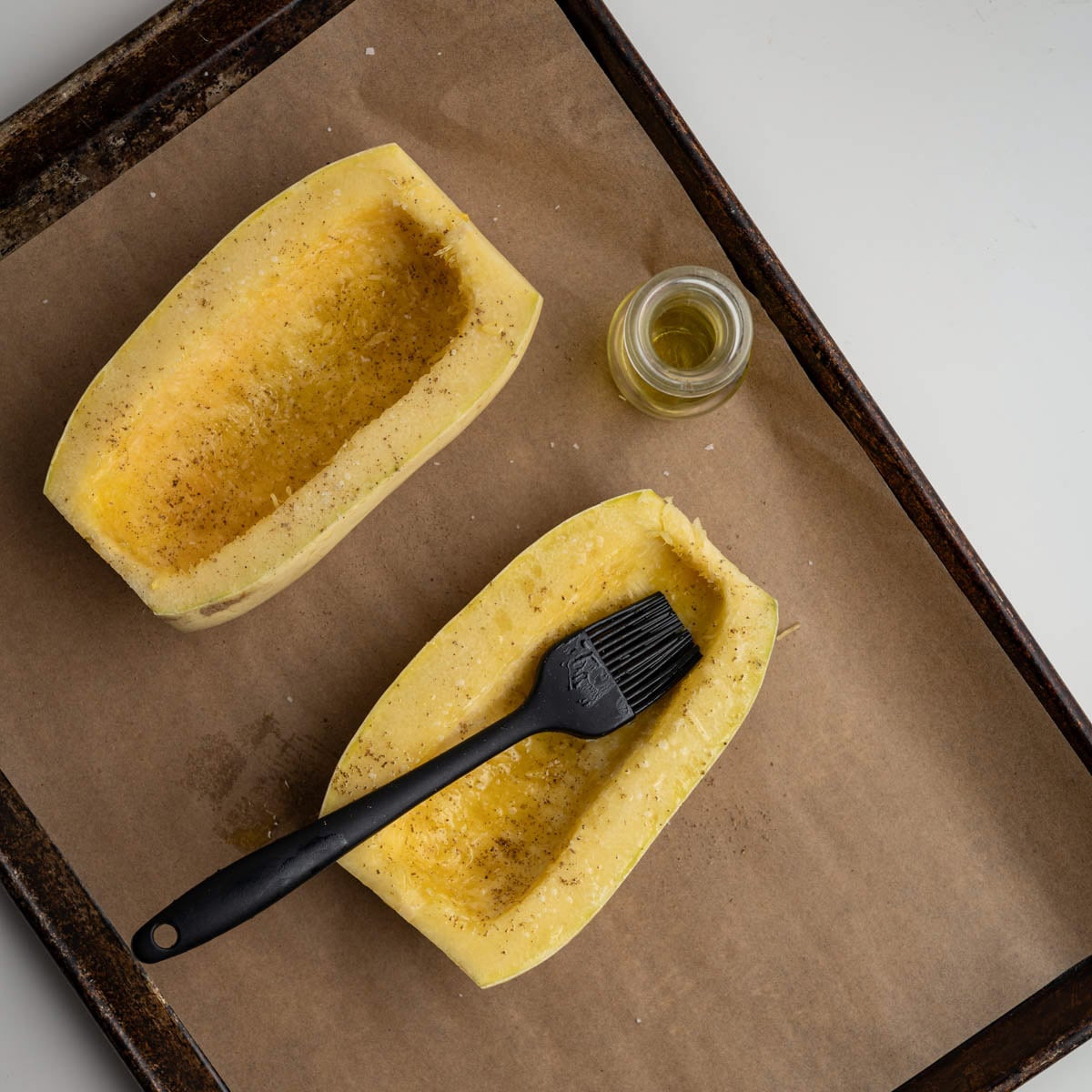
Step 3: Grab a baking sheet and line it with parchment paper for easy cleanup. Place both squash halves cut-side up. Drizzle each half with garlic-infused olive oil and use a basting brush or your hands to make sure every part of the cut surface is covered. Skip the skin - it is not edible. Season with salt and pepper.
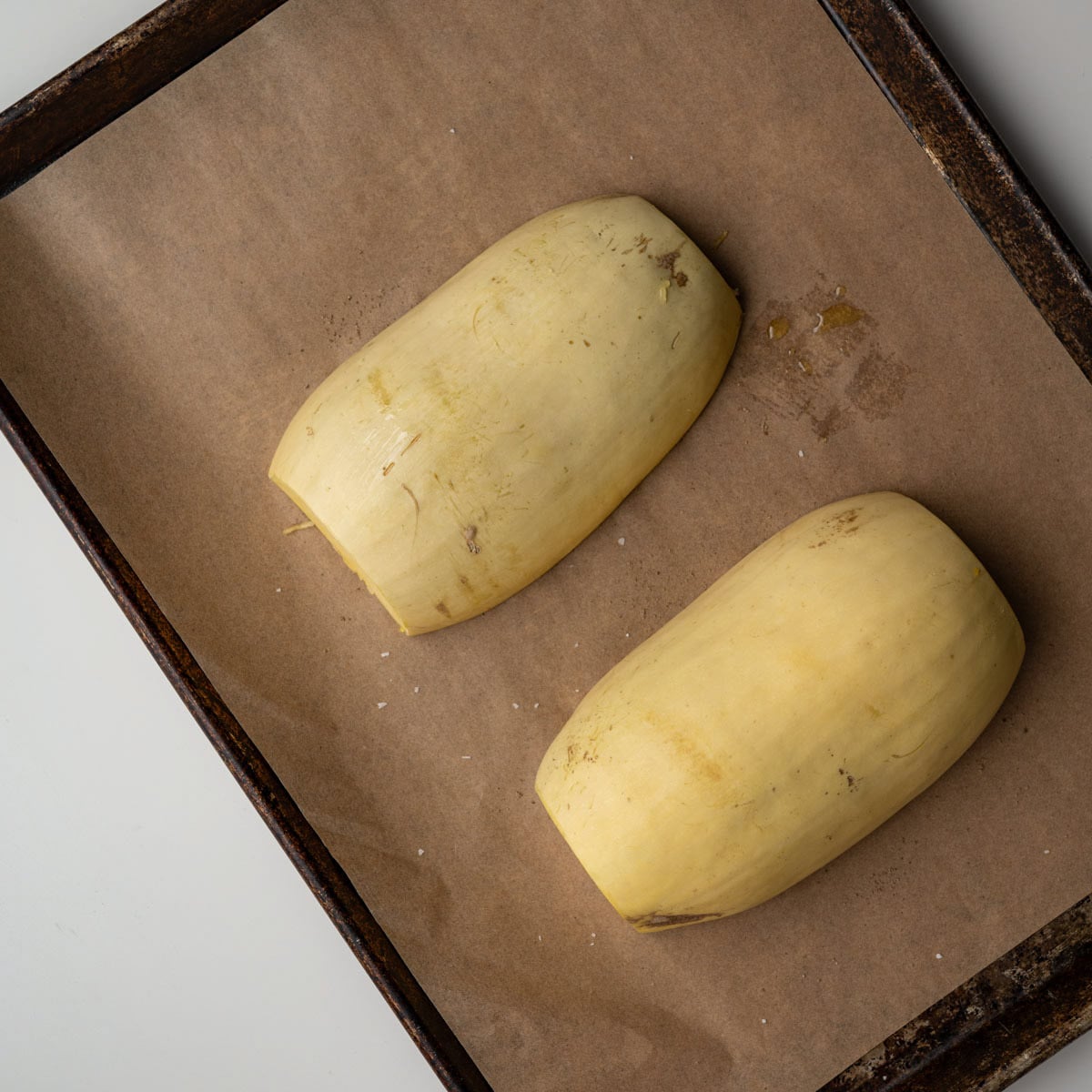
Step 4: Bake for 30-35 minutes or until the squash is fork tender. A fork should slide in easily with no resistance.
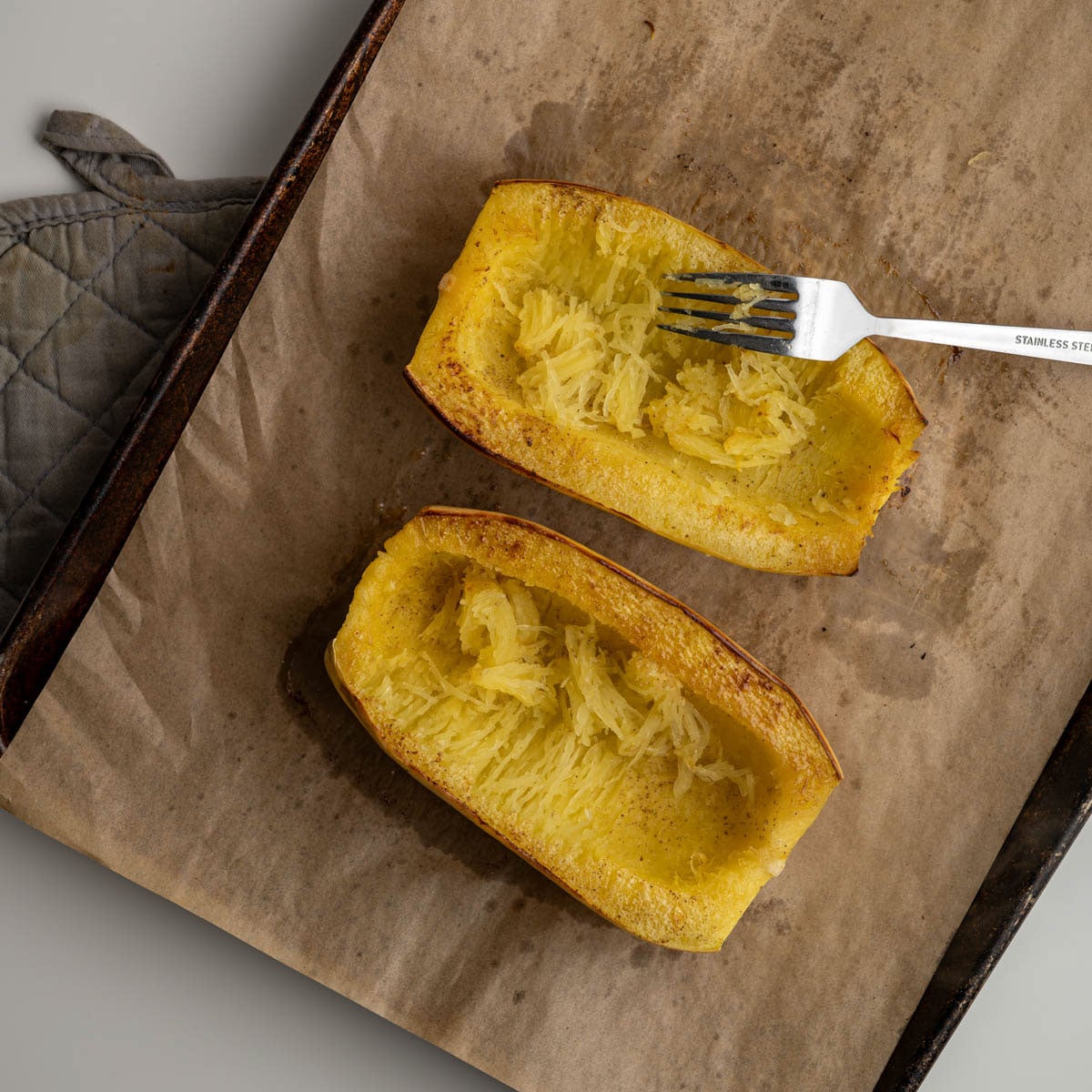
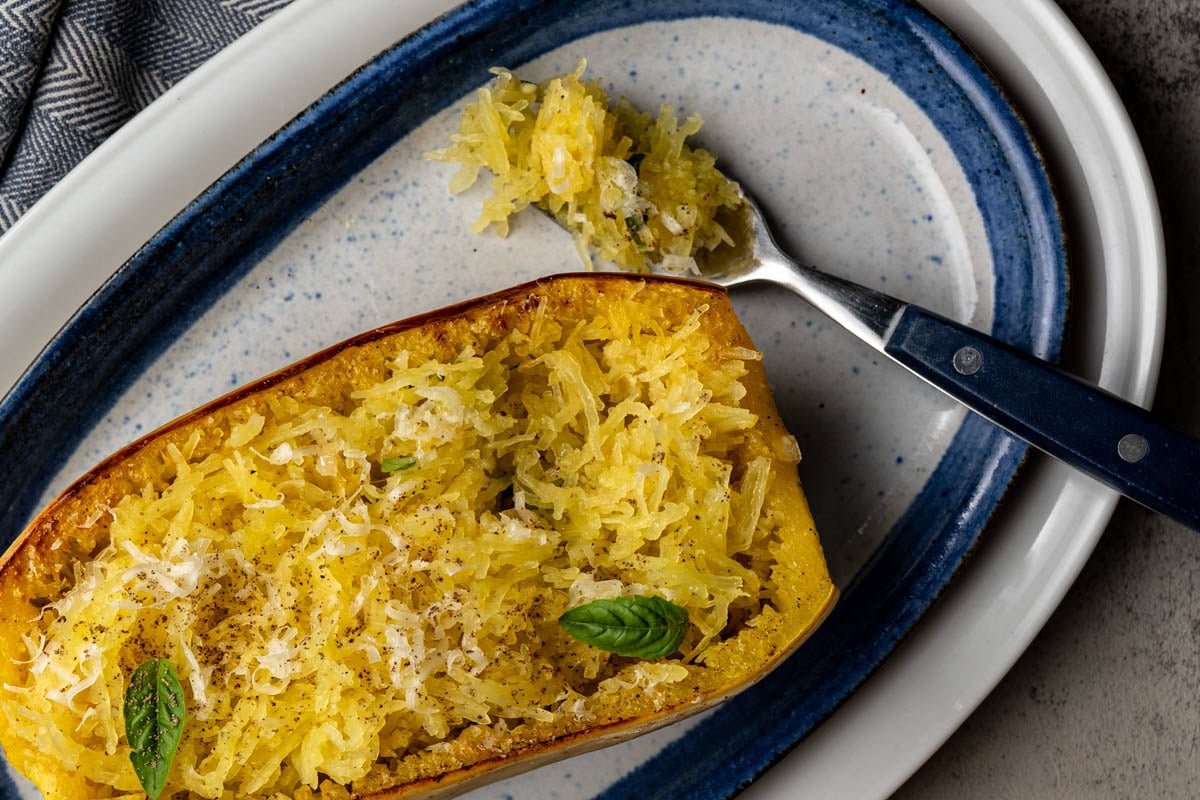
Step 5: Remove from the oven. Use a fork to scrape side to side on each squash half, pulling the flesh into long, noodle-like strands. This is the fun part.
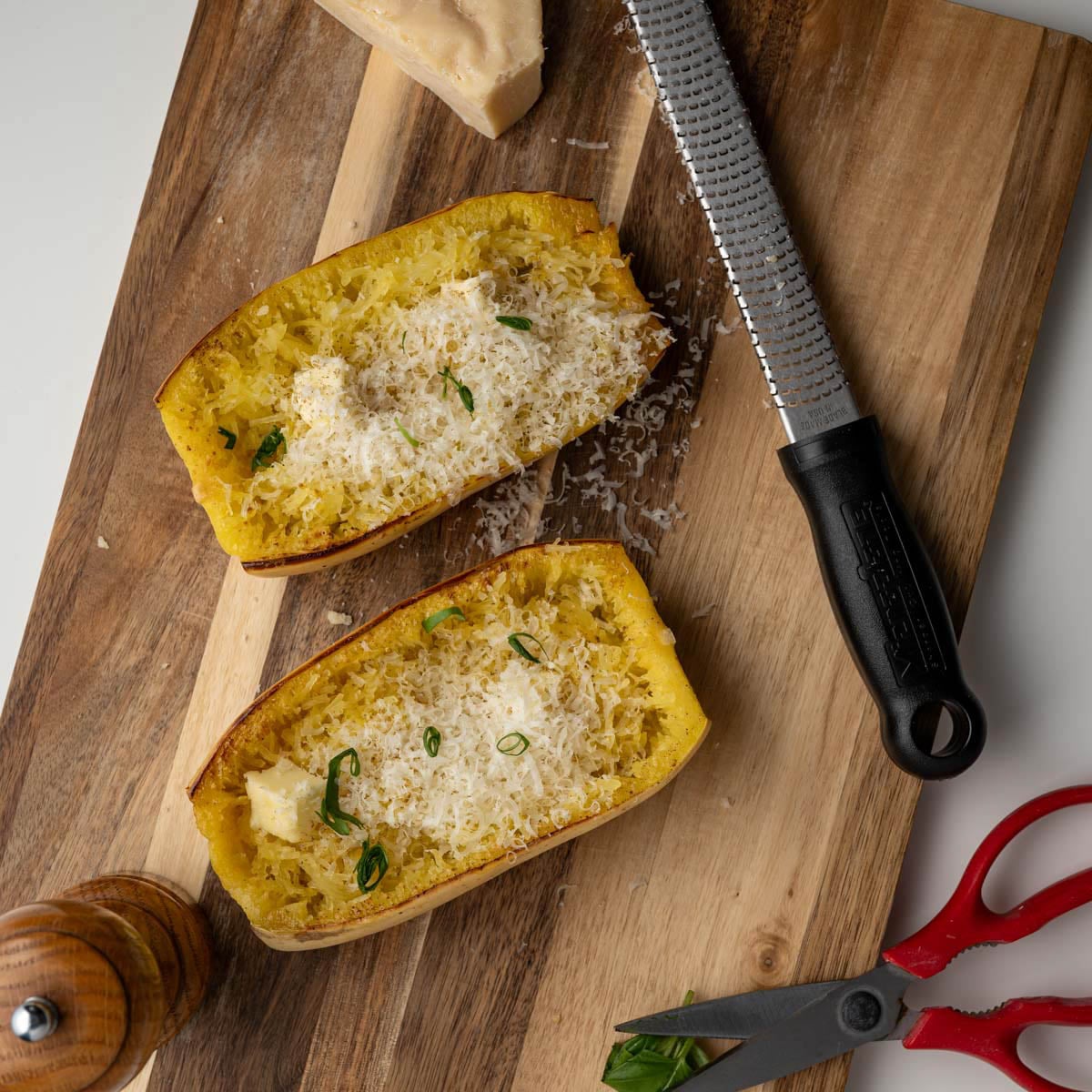
Step 6: Add the butter cubes, black pepper, and Parmesan right into the squash. Gently stir everything together until the butter melts and the cheese coats the strands.
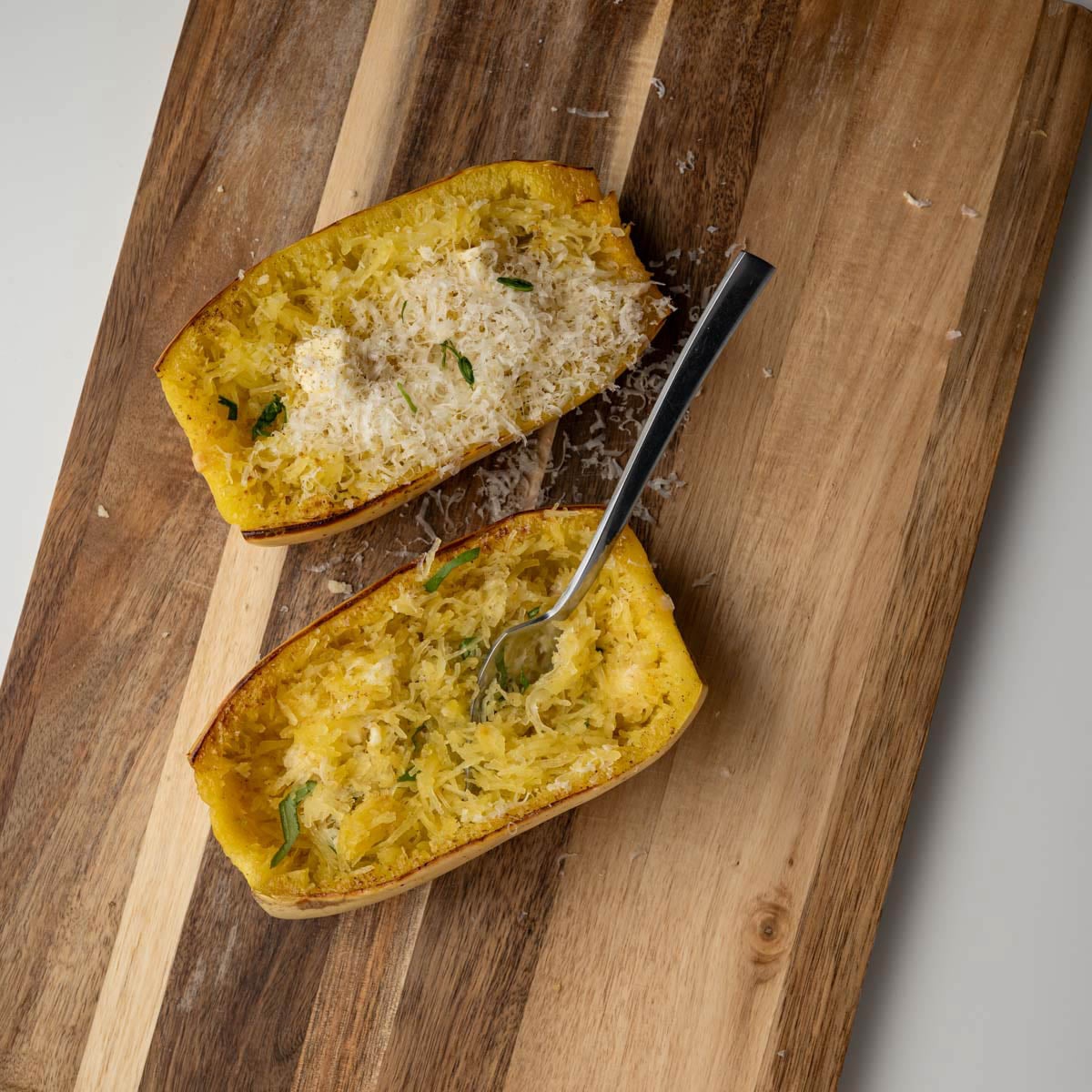
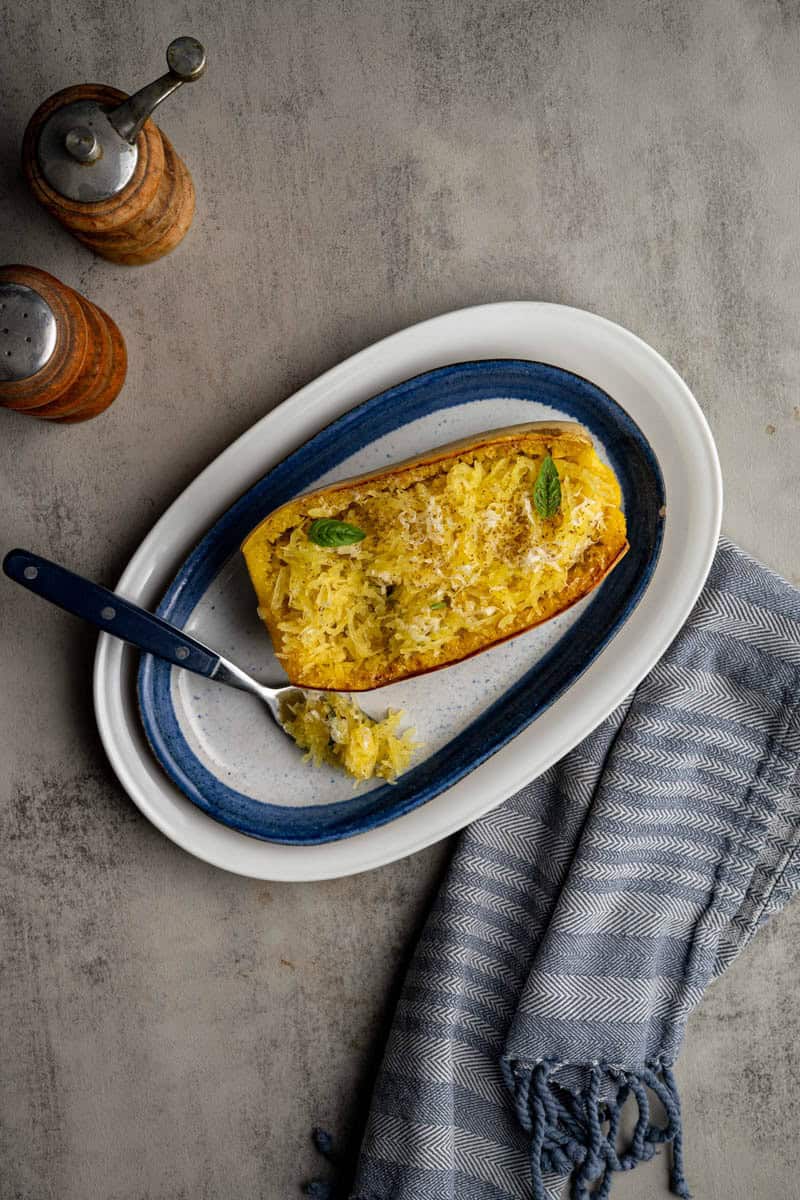
Step 7: Taste and add a pinch of salt if needed. Top with fresh basil and serve warm.
Tips and Tricks
Soften the skin before cutting. Microwave the whole squash for 1-2 minutes before you slice it. This one step makes the whole process safer and easier. No white-knuckling a sharp knife through a rock-hard squash.
Check for doneness with a fork, not a timer. Oven temperatures vary and squash sizes vary even more. Start checking at 30 minutes and go by feel. The fork should slide right in.
Do not rush the forking step. Let the squash cool for just a few minutes after it comes out of the oven before you start scraping. It is easier to handle and the strands come out cleaner.
Double the Parmesan. I said what I said. The recipe calls for ¼ cup, and that is a solid starting point. But if you love cheese - and you do - add a little more. No negotiations required.
Serve it right away. Spaghetti squash is best fresh out of the oven. The strands hold their texture and the butter is still melty. Leftovers are still good, but the first serve is where it is at.
Ingredient Swaps
- Butter - For a dairy-free version, swap in a dairy-free butter substitute. It still melts nicely into the warm squash strands.
- Parmesan - Pecorino Romano is a great swap. It is a little sharper and saltier, but it melts just as well. Use the same amount.
- Fresh Basil - Out of basil? Flat-leaf parsley or fresh chives both work and keep things low FODMAP.
Variations
Dairy Free Spaghetti Squash: Use a dairy-free butter substitute and skip the Parmesan, or use a dairy-free Parmesan alternative like nutritional yeast. The garlic oil still carries a ton of flavor on its own.
Add Protein: Turn this into a full meal by adding cooked shredded chicken right into the squash strands along with the butter and cheese. My easy lemon chicken breasts are a great pairing because the lemon and Parmesan flavors work really well together.
Spicy Version: Add a pinch of red pepper flakes when you add the Parmesan. A little kick goes a long way. My son votes for spice every time.
Make It a Bigger Side: Roast some low FODMAP vegetables at the same time and serve everything together. My oven roasted vegetable recipe uses the same 400 degree oven, so the timing works out perfectly.
I haven't tested these ingredient swaps or variations in my kitchen. If you replace or add any ingredients, please let us know how it turned out in the comments below!
Storing and Reheating
Store: Keep leftover spaghetti squash in an airtight container in the refrigerator for up to 4 days. Store it without the basil if possible - fresh herbs do not love the fridge.
Reheat: Place a serving on a microwave-safe plate and heat for 1-2 minutes, stirring halfway through. Add a small cube of butter or a splash of olive oil when reheating to bring it back to life. The microwave works great here.
Freeze: I do not recommend freezing cooked spaghetti squash. The strands get watery and mushy once thawed. Make another batch instead - it only takes 35 minutes.
Low FODMAP Notes
Low FODMAP ingredient information is based on the Monash University Food App and FODMAP Friendly App testing results as of the day posted. As always, modify based on your gut and what works for you on a low FODMAP diet.
- Spaghetti Squash - Is spaghetti squash low FODMAP? Yes! Monash University has tested spaghetti squash and it is safe at ½ cup or 75 grams per meal. Great news for folks who love a vegetable that pulls double duty as a pasta alternative.
- Garlic-Infused Olive Oil - Safe at 1 tablespoon or 20 ml per meal. Fructans in garlic are water-soluble, not oil-soluble, which means the garlic flavor transfers into the oil but the FODMAPs stay behind with the garlic itself. This is why it shows up in basically every savory recipe on this site.
- Butter - Low in lactose and considered low FODMAP. Safe at 1 tablespoon or 20 grams per meal.
- Parmesan - Naturally low in lactose. Safe at 40 grams per meal.
- Fresh Basil - Safe at typical herb amounts. A great finishing touch that adds flavor without any FODMAP concerns.
For additional information on a low FODMAP diet, please visit Monash University or FODMAP Friendly. Both have websites and apps for additional guidance and testing results.
FAQs
Yes! Spaghetti squash is low FODMAP at ¾ cup or 75 grams per serving according to Monash University testing. It is one of the best low FODMAP vegetables you can keep in your kitchen.
A fork should slide into the flesh easily with no resistance. Start checking at the 30-minute mark since squash size varies and so do ovens.
Yes. Microwave the halved, oiled squash cut-side down in a microwave-safe dish with a little water for about 10-12 minutes. Baking gives you a slightly better flavor and texture, but the microwave works when time is short.
It has a mild, slightly sweet flavor - much more neutral than you might expect. The garlic-infused olive oil, butter, and Parmesan do most of the flavor work here. It won't fool anyone into thinking it's pasta, but it is genuinely good on its own.
Yes. Swap the butter for a dairy-free alternative and sprinkle in a bit of nutritional yeast for a flavor boost. The garlic-infused olive oil still brings plenty of flavor.
Look for one that feels heavy for its size with firm, dull skin. Shiny skin can mean it was picked too early. Avoid any with soft spots.
What To Serve With Spaghetti Squash
This parmesan spaghetti squash works alongside just about any protein. Pair it with Low FODMAP Pork Tenderloin for a dinner that feels like something special on a Tuesday. Or keep it simple next to baked chicken for a weeknight that doesn't require much thinking. My green beans with lemon sauce also rounds out the plate nicely when you want a little more green on the table.
Looking for more ideas? Browse all the low FODMAP recipes and see what works for your week.
More Low FODMAP Sides You'll Love
Love This Recipe?
Leave a ⭐⭐⭐⭐⭐ rating + comment. It helps so much, and we love hearing from everyone! Thank You -Venessa
Recipe
Low FODMAP Spaghetti Squash
Equipment
- Baking Sheets
Ingredients
- 2 pound spaghetti squash (Note 1)
- 2 teaspoons garlic-infused olive oil
- salt and pepper for roasting
- 1 tablespoon salted butter cut into small cubes
- ¼ teaspoon freshly ground black pepper
- ¼ cup freshly shredded Parmesan cheese
- 1 teaspoon fresh basil chopped
- Pinch of salt if needed after adding the Parmesan
Instructions
- Preheat the oven to 400 degrees F. Wash the squash. Slice off the top and bottom, then set it upright on a cutting board and slice straight down the middle. Use a sharp knife. To make cutting easier, microwave the whole squash for 1-2 minutes before cutting to soften the skin.
- Using a spoon, scrape out all the seeds and stringy bits from the center. Discard.
- Line a baking sheet with parchment paper. Place both squash halves cut-side up. Drizzle each half with garlic-infused olive oil and use a basting brush or your hands to coat the cut surface evenly. Skip the skin - it is not edible. Season with salt and pepper.
- Bake for 30-35 minutes or until fork tender. A fork should slide in easily with no resistance.
- Use a fork to scrape along the sides of each squash half, pulling the flesh into spaghetti-like strands.
- Add the butter cubes, black pepper, and Parmesan directly to the squash. Gently stir until the butter melts and the cheese coats the strands. Taste and add a pinch of salt if needed. Top with fresh basil and serve warm.

Leave a Reply